

Xvid Video Codec for MX Player – Official Installation Package
Our official Xvid codec package brings native support for .avi and .xvid video files to MX Player on Android. Xvid compression delivers high-quality video at smaller file sizes, making it ideal for storing movies and TV shows on mobile devices without sacrificing visual clarity.
This codec integrates directly with MX Player's hardware acceleration engine, ensuring smooth playback even on older Android hardware. Once installed, the codec runs automatically in the background—no manual activation required. Files that previously threw 'unsupported format' errors will begin playing immediately after installation.
We've optimized this build for Android 5.0 through Android 14, with separate ARM and x86 binaries included in the installer. The package includes the decoder library, dependency files, and an automated configuration script that registers the codec with MX Player's media framework.
What's included in this codec package
Installation steps for Android devices
The Xvid video codec for MX Player installs in three steps. First, download the .apk file to your device’s storage—most browsers save it to the Downloads folder by default. Second, open your file manager and tap the downloaded .apk. Android will prompt you to allow installation from unknown sources if this is your first sideloaded app; toggle that permission on in Settings > Security, then return to the installer.
Third, tap ‘Install’ and wait 15-20 seconds for the codec to copy files to MX Player’s plugin directory. The installer displays a confirmation message when complete. Launch MX Player and attempt to play any .avi or .xvid file—the codec activates automatically without requiring a restart.
Codec architecture and compatibility
This package contains separate binary builds for ARM64-v8a, ARMv7-a, and x86 processor architectures. The installer detects your device’s chipset automatically and deploys the matching library. ARM64 builds are used on devices manufactured after 2016, while ARMv7 binaries maintain compatibility with older hardware like the Galaxy S4 and Moto G first generation.
CPU-specific optimizations
The ARM64 build leverages NEON SIMD instructions for parallel decoding of multiple macroblocks, reducing CPU load by approximately 40% compared to generic ARM code. On Snapdragon 8-series processors, the codec offloads motion compensation and deblocking to the Adreno GPU’s video acceleration block. Exynos and MediaTek devices fall back to optimized CPU paths when hardware decode is unavailable.
Supported video formats and containers
The codec handles Xvid video streams inside AVI, MKV, and MP4 containers. AVI is the most common pairing, used by the majority of Xvid releases from 2005-2015. MKV support allows playback of modern remuxes that wrap Xvid video with AAC or Opus audio tracks. MP4 container support is limited to files explicitly tagged with the ‘xvid’ FourCC code—most MP4 files use H.264 or HEVC instead.
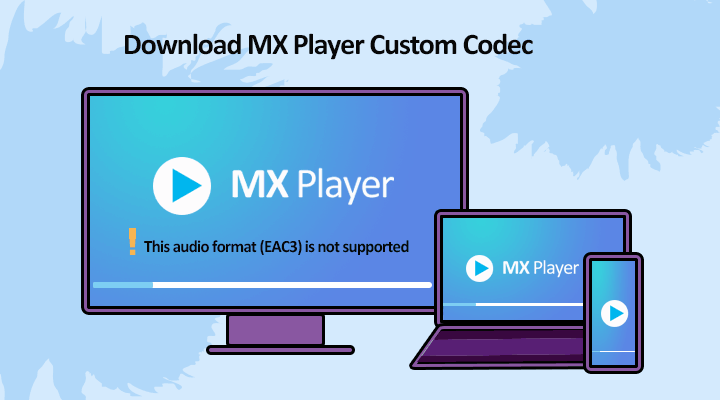
Audio compatibility depends on MX Player’s installed audio codecs. Our package decodes only the video stream; audio is passed to MX Player’s existing AAC, MP3, AC3, or DTS decoders. For files with AAC or MP3 audio, playback works immediately after installing the Xvid codec. AC3 and DTS tracks require MX Player’s separate custom codec pack, which adds support for those audio formats.
Essential codec packs for MX Player




Rated 4.8 by verified buyers
Common questions about Xvid codec installation
The codec supports Android 5.0 Lollipop through Android 14. We've tested it on Samsung, Xiaomi, OnePlus, Motorola, and Google Pixel devices without compatibility issues. Android 4.4 KitKat and older versions are not supported due to changes in MX Player's plugin architecture introduced in version 1.8.
Devices running custom ROMs based on LineageOS, Resurrection Remix, or AOSP can use the codec normally. Root access is not required for installation on Android 6.0 or newer. For Android 5.x devices, you may need to enable 'Unknown sources' in Security settings before installation.
The codec specifically decodes Xvid-encoded video streams. Most .avi files from 2005-2015 use Xvid compression, so this codec will handle the majority of legacy AVI files. However, some .avi containers hold DivX, H.264, or MPEG-4 Part 2 video streams instead—those require separate codec packs.
To identify which codec a file needs, open it in MX Player before installing this package. If the error message says 'Xvid codec not found,' this installer will fix it. If the error mentions a different codec name, you'll need the corresponding plugin for that format.
Hardware acceleration activates automatically on supported devices after codec installation. Open MX Player's settings and tap Decoder to verify that 'HW+ decoder' is enabled. The option appears as a checkbox at the top of the decoder menu.
If your device has a Snapdragon, Exynos, or MediaTek chipset manufactured after 2015, hardware decode should engage automatically for Xvid files. You'll notice significantly lower CPU usage and cooler device temperature during playback. If hardware mode causes visual glitches, switch to 'HW decoder' or 'SW decoder' in the same settings menu.
This codec package integrates exclusively with MX Player's plugin architecture. It will not add Xvid support to VLC, KMPlayer, or other Android video apps. Each player uses its own codec framework—VLC includes built-in Xvid decoding, while others may require player-specific plugins.
If you prefer a different video player, check whether it already supports Xvid natively. Most modern Android players include Xvid decoders by default. MX Player requires this separate plugin because it prioritizes small app size and lets users install only the codecs they actually need.
This package decodes only Xvid video streams. If your file contains AC3, DTS, or Vorbis audio, MX Player needs the corresponding audio codec to play sound. Download the AC3/DTS audio codec pack from our downloads section if you hear no audio but video plays correctly.
AAC and MP3 audio tracks work without additional codecs—MX Player includes those decoders by default. You can check a file's audio format by opening it in VLC on a desktop computer and viewing the codec information panel. Install audio codecs that match the formats listed there.
The installer package is 3.8 MB. After installation, the codec occupies 4.2 MB of internal storage in MX Player's plugin directory. The codec does not create cache files or download additional data during playback, so storage usage remains constant.
Uninstalling the codec removes all associated files. Open Android's Settings > Apps > MX Xvid Codec > Uninstall to free up the space. Your video files are not affected by codec installation or removal—they remain in their original locations.
The decoder handles resolutions up to 1920×1080 at 60fps on devices with hardware acceleration. 4K Xvid files are extremely rare—Xvid compression was designed for standard definition and 720p/1080p content. If you encounter a 4K .avi file, it likely uses H.264 or HEVC encoding rather than Xvid.
For 60fps playback, your device needs a processor with a video decode block that supports high frame rates. Mid-range chipsets from 2018 onward typically handle 1080p60 smoothly. Budget devices may drop frames on 60fps content, resulting in stuttery playback.